About The Event
The Mid-Atlantic Mathematical Logic Meeting (MAMLS) is back on track at the beginning of the fall.
Where
Rutgers, The State University of New Jersey.
When
Friday to Sunday
November 6-8
Schedule

Iian Smythe
Some applications of parametrized Ramsey theory
Abstract
We will discuss applications of parametrized Ramsey theorems, that is, theorems in which a homogeneous set can be found for a large number of partitions of a structure simultaneously, in settings such as vector spaces and Banach spaces.
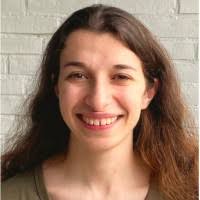
Cecelia Higgins
Spectral theory and descriptive combinatorics for Borel pmp graphs
Abstract
In classical spectral graph theory, one associates to finite graphs Hermitian matrices, such as the adjacency matrix, that encode graphical information. The spectral properties of these matrices are then leveraged to analyze the combinatorial features, including vertex coloring, edge coloring, and matching, of the corresponding graphs. Analogously, one can associate bounded, self-adjoint operators, such as the adjacency operator, to Borel pmp graphs of bounded degree. In this talk, we present new descriptive combinatorics results for pmp graphs that involve the application of spectral theory to their associated operators. This is joint work with Pieter Spaas, Alexander Tenenbaum, and Sofia Torelli.

Discussion & HH
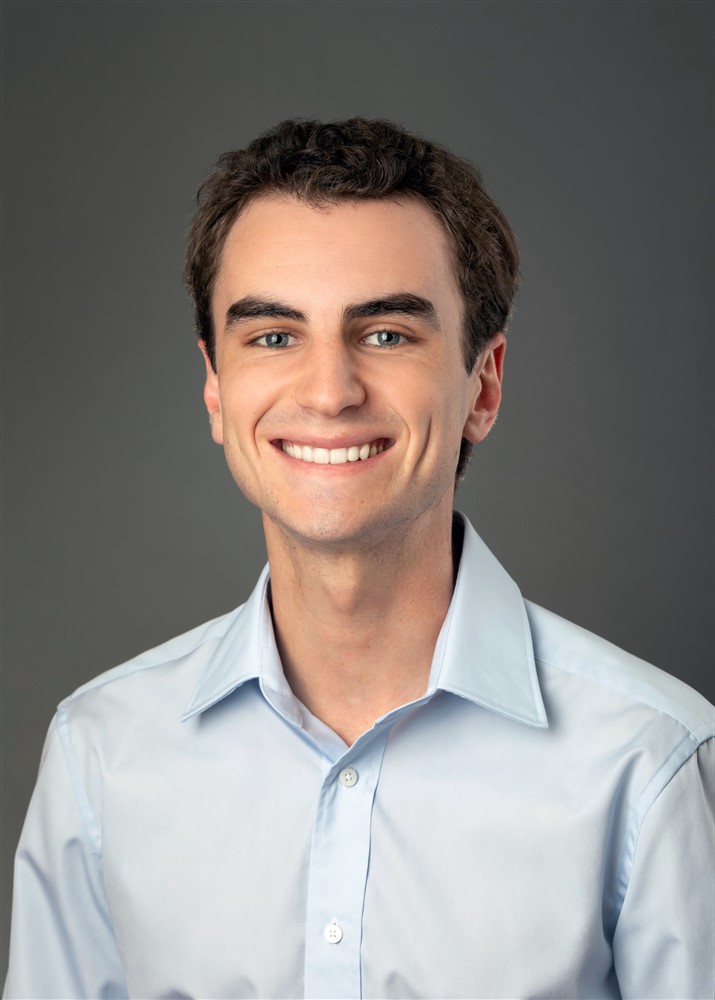
Darien Farnham
First order rigidity and symplectic geometry in the constructible universe
Abstract
I’ll discuss the main result of my PhD thesis, which shows that, assuming the axiom of constructibility, if the symplectomorphism groups of two closed symplectic manifolds have the same first order theory, then underlying manifolds are conformally symplectomorphic.

Ronnie Nagloo
TBA
Abstract
TBA

Thomas Koberda
Set theory, logic, and homeomorphism groups
Abstract
I will discuss some recent results with Hanson, de la Nuez Gonzalez, and Rosendal which show that first order rigidity for noncompact manifold homeomorphism groups generally depends on the choice of underlying set theory. Similarly, I will discuss the fact that whether the type of a homeomorphism determines its conjugacy class also depends on the choice of underlying set theory.
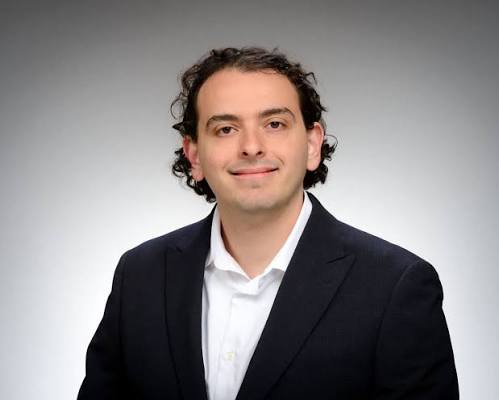
David Gonzalez
If Vaught's conjecture is false, what now?
Abstract
Ackerman, Freer, and R. Knight recently posted a preprint containing a counterexample to Vaught's conjecture in infinitary logic. The paper uses AI-assisted proof methods and, as of the time of writing, does not have a complete human-readable version available, though Lean proofs are available. The ideas are based on a widely circulated construction of R. Knight from 2002. This talk will not focus on the construction in this preprint; instead, it will highlight some of the work motivated by the infinitary version of Vaught's conjecture since 2002. In particular, we will provide an overview of the field of Scott analysis and highlight some recent results. We discuss problems that regard the sharpening of our knowledge of Vaught's conjecture itself, and also motivate some problems that are of independent interest.

Narmada Varadarajan
Continuous combinatorics and LOCAL algorithms
Abstract
Given a class of graphs and a coloring problem, what is the optimal complexity of a solution? A descriptive set theorist reading this will insert the word "Borel" in front of as many words as they can, while a computer scientist will interpret it as an algorithmic question about finite graphs. It turns out that they are still asking the same question (almost). My talk will give an overview of the translation between LOCAL algorithms on finite graphs and Borel solutions on infinite Borel graphs, focusing on the case of continuous solutions. For some graph classes (trees and Cayley graphs), continuous solutions are exactly equivalent to fast LOCAL algorithms. I will discuss my current research on extending this equivalence to all graph classes. If time permits (which it rarely does in a math talk), I will also talk about other open problems in this area.
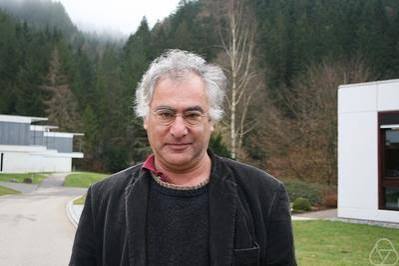
Anand Pillay
Relative categoricity and stability
Abstract
I will discuss the subject of categoricity over a predicate. Both the history and some more recent results.
Will Adkisson
The Super Tree Property Up To \(\aleph_{\omega+1}\)
Abstract
The super tree property (also known as ITP) is a generalization of the tree property that characterizes supercompactness up to inaccessibility in much the same way that the tree property characterizes weak compactness. That is, an inaccessible cardinal \(\kappa\) is supercompact if and only if the super tree property holds at \(\kappa\). A longstanding project in set theory is to force the tree property and its generalizations at many successive cardinals simultaneously. A landmark result in this program is Neeman's construction of a model in which the tree property holds at \(\aleph_n\) for \(1< n<\omega\) and at \(\aleph_{\omega+1}\) simultaneously. We generalize this result to the super tree property, showing that it is consistent for the super tree property to hold at \(\aleph_n\) for \(1< n<\omega\) and at \(\aleph_{\omega+1}\) simultaneously. This is joint work with Maxwell Levine.

Turbo Ho
Complexity of the Farey Graph and the class of models of its theory
Abstract
The Farey sequence of order \(n\) is the sequence of reduced fractions in \([0,1]\) with denominators at most \(n\), arranged in order of increasing size. The Farey graph encodes adjacency in the Farey sequences, and its origins date back to Haros, Farey, and Cauchy. The Farey graph appears in many areas of mathematics, including number theory, hyperbolic geometry, and geometric group theory.
Disarlo, Koberda, and de la Nuez Gonzalez showed that the theories of the curve graphs of surfaces of finite type, which include the Farey graph, are \(\omega\)-stable. Mohammadi Khangheshlaghi and Tent gave an explicit set of axioms for the theory of the Farey graph: it is a graph with no isolated vertices where every edge is contained in exactly two triangles and every finite induced subgraph has a removable vertex. They also gave a self-contained proof that T is \(\omega\)-stable of Morley rank \(\omega\) and established quantifier elimination in an explicitly expanded language.
We study the Scott analysis and the Borel complexity of the countable models of the theory \(T\) of the Farey graph. We show that the Farey graph has a computable \(\Pi_2\) Scott sentence, and in fact, it is the only model of \(T\) with a \(\Pi_2\) Scott sentence. We also characterize the models of T with a d-\(\Sigma_2\) Scott sentence as those containing only finitely many copies of the Farey graph. We show that \(T\) is \(\Sigma_1\)-small, meaning that it has only countably many infinitary \(\Sigma_1\) types, but is not \(\Sigma_2\)-small. Finally, we show that \(T\) is Borel complete, namely, the isomorphism problem for models of \(T\) is maximally complicated among isomorphism problems for countable structures.
Sławek Solecki
High homogeneity of the pseudoarc
Abstract
A continuum is a compact, connected, second-countable space. The pseudoarc \(P\) is the unique generic continuum (in a precise sense). As such, it has attracted considerable attention. In 1948, Bing proved that the pseudoarc is homogeneous, that is, given two points \(x\) and \(y\) of \(P\), there is a homeomorphism of \(P\) mapping \(x\) to \(y\).
I will show that the homogeneity of the pseudoarc goes much further. I will present the first result asserting homogeneity between certain uncountable compact subsets of \(P\). The proofs use the projective Fraïssé approach. This approach allows us to translate dynamical problems into combinatorial ones, which we then solve.
The talk is based on joint work with Todor Tsankov.
Event Venue
Rutgers, New Brunswick
Rutgers Academic Building — Room ABW1170 on 9/27-28
The building is wheelchair accessible.
The building features family restrooms with changing tables.
Sponsors